

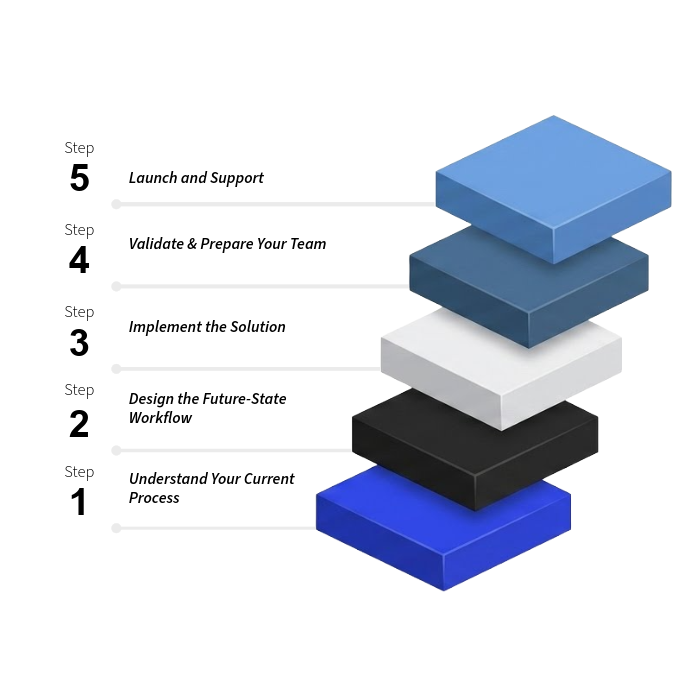
Our role is to work with your team to review current operations, document requirements, develop workflow solutions, and support implementation based on your organization's needs.
Many organizations seek ways to better manage workflows, information, and operational activities but may not have the time or internal resources to document, design, and implement new processes.

Many organizations seek ways to better manage workflows, information, and operational activities but may not have the time or internal resources to document, design, and implement new processes.

Many organizations seek ways to better manage workflows, information, and operational activities but may not have the time or internal resources to document, design, and implement new processes.
.png)
Many organizations seek ways to better manage workflows, information, and operational activities but may not have the time or internal resources to document, design, and implement new processes.
.png)
Many organizations seek ways to better manage workflows, information, and operational activities but may not have the time or internal resources to document, design, and implement new processes.
When processes are not documented or standardized, outcomes may vary depending on who performs the work. This can create challenges as teams grow and responsibilities expand across departments.
- Inconsistent workflows
- Undocumented procedures
- Missed follow-ups
- Dependence on tribal knowledge
Organizations may spend time transferring information between systems and completing recurring administrative activities. Automation tools may provide options for capturing, organizing, and routing information through predefined workflows.Duplicate data entry
- Duplicate data entry
- Repetitive administrative activities
- Manual reporting processes
- Time spent locating information
Some organizations seek operational technology solutions without replacing existing software platforms. Automation tools may be configured to support data collection, workflow management, and information accessibility while remaining compatible with current business processes.
- Connect information across systems
- Support workflow management
- Reduce manual information transfers
- Support operations as activity levels increase
Many organizations use spreadsheets, email, text messages, paper forms, and whiteboards to manage operational information. When information is maintained across multiple locations, users may experience challenges locating, reviewing, or updating information across departments and processes.
- Information stored in multiple locations
- Limited access to operational information
- Difficulty determining current work status
- Reporting activities that require manual compilation
Quick answers for business process automation services.
Organizations often evaluate automation when they are managing information, workflows, approvals, reporting activities, or operational processes across multiple systems, documents, or communication channels. The suitability of automation depends on each organization's operational requirements, existing systems, and business objectives.
Automation technologies can be configured to support a variety of business activities, including approvals, task management, customer onboarding, project tracking, service requests, reporting, document management, scheduling, inventory-related workflows, notifications, and operational information management. Available functionality depends on system capabilities, project scope, and implementation requirements.
Not necessarily. Some automation projects may involve integrating with or configuring existing systems, while others may require new software or process changes. The appropriate approach depends on the organization's current technology environment, requirements, and project objectives.
Operational visibility generally refers to access to information regarding business activities, workflow status, operational data, and process-related information. The availability and accuracy of operational information depend on system configuration, data sources, integrations, and user activity.
Project outcomes vary based on factors such as business processes, implementation methods, system configuration, data quality, user adoption, and operational requirements. Automation solutions may include workflow management, information collection, notifications, dashboards, reporting tools, and process documentation features based on project scope.
We follow a structured process that includes reviewing current workflows, documenting requirements, developing workflow designs, configuring technology solutions, validating functionality, providing user training, and supporting deployment activities. Each project is tailored to the organization's specific operational requirements.
I
Schedule a discovery conversation to discuss your current processes, information management needs, and technology requirements.

.png)


.png)